
How to tell math from myths and play mindfully ️
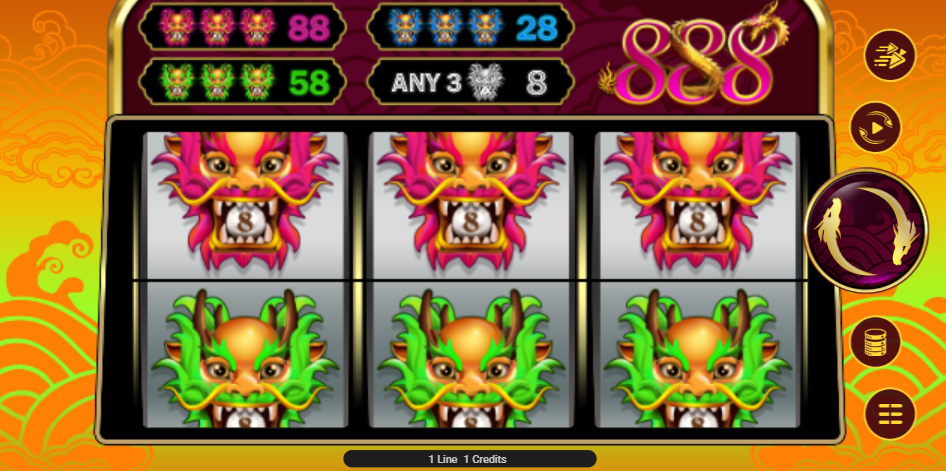
When people talk about “fair play” in slots, they usually mean not luck, but transparent rules and verifiable math. In 888 Slot this is especially noticeable, because the game looks simple, but inside it runs strict RNG logic and a paytable. If you approach it calmly, Empayer 888 becomes not a slogan, but a reminder: the result is not “chased,” it is built over distance. Fairness starts with numbers, because they are what limit imagination and “magical thinking”.
Fair Play Insight: In slots, fairness is not about luck—it is about transparent rules and verifiable math. Behind the simple look of 888 Slot works a strict RNG and a fixed paytable, which means results are not “chased,” but formed over distance. Numbers limit imagination and protect players from magical thinking, turning fair play from a slogan into a practical concept.
Parameters That Set Expectations
888 Slot has a clear structure, and that helps you quickly understand how a win is formed. It is important to look not only at the theme and animations but also at RTP, volatility, and the betting range in USD. And then build your play style and session length from those. 888 Slot has 5 reels and 3 rows, as well as 20 adjustable paylines, so the mechanics read without unnecessary confusion.
The stated RTP is 96.5%, and the volatility is medium, meaning the game usually delivers a mixed rhythm: not only rare spikes but also more frequent small hits. The betting range is convenient for the US: from $0.10 to $100 per spin. The maximum win potential is listed as 2,500× the bet, and it is important to treat that as a top ceiling, not as a “promise”.
RTP and Volatility: Where “Fairness” Is and Where Expectations Are
RTP is theoretical return over a long distance, not a forecast for one evening. Volatility describes the nature of payout distribution: will wins be more frequent and smaller, or rarer and larger. So fair play is when the parameters are stated transparently and match what the slot’s behavior shows in a long series. By the way, the concept of “slot volatility” is usually explained as an indicator of risk and payout spread, and it is useful to know this in advance.
How Fairness Works Inside: RNG, Checks, and Standards ️

A slot does not “think” about your balance and does not adjust to a player’s mood, if we are talking about a correctly implemented system. The outcome of each spin is determined by a random number generator (RNG), and then the result is translated into symbols on the screen according to the game rules. Fairness here is not romance, but control: code is checked, and statistics are tested. That is exactly why the topic of independent testing matters more than any promises.
RNG in Simple Terms: Why “Streaks” Prove Nothing
RNG is a mechanism that produces random values, and the game then converts them into a specific layout. Standards for interactive gaming systems describe that laboratories test RNG and evaluate distributions and the independence of results to eliminate bias and predictability. They also explicitly discuss RNG types and note that testing includes statistical checks and analysis. For the player, the meaning is simple: a “streak” of empty spins does not mean it “has to pay,” and that is precisely a sign of fair randomness.
Independent Testing: What Laboratories Actually Check
Independent tests usually come down to two things: the quality of randomness and the correctness of rule implementation. For example, eCOGRA describes RNG testing as a way to ensure that results are truly random and meet strict requirements of the regulatory environment. This matters because even a good algorithm can be spoiled by incorrect “wrapping” inside a game. So fairness is a bundle: RNG + correct payout math + no hidden “bias”.
“Fairness in slots begins where randomness is proven by tests, and payout rules can be explained without fog.”
The US and Fair Play: Geolocation, Data Verification, and State Rules
In the US, online play is regulated at the state level, so access conditions may differ depending on location. Because of this, operators use geolocation checks to restrict play to the required territory and comply with requirements. Identity and account data checks are also common because that is part of user protection and compliance procedures. It is important to understand: these steps do not “get in the way”; they usually show that the platform operates by rules, not in a gray zone.
Geolocation: Why It Can Matter More Than VPN Advice from the Internet
Geolocation is needed not out of curiosity, but to comply with the laws of a particular state and the boundaries of the permitted area. Industry analyses emphasize that precise location verification and protection against rounds are a typical regulatory necessity. If the system filters out suspicious connections or asks you to confirm your location, it more often looks like a sign of control. For fair play, the logic is simple: rules should be the same for everyone who is in the permitted zone.
KYC and Data Confirmation: Why the Player Needs It
Account verification is usually tied to protecting the account, payments, and withdrawals from fraud. It also helps reduce the risk of unauthorized access when someone tries to log in from another device or region. In a fair model, it looks like a standard procedure: you confirm your details, and the operator reduces the probability of disputes. If the process explanation is transparent and clear, it adds trust.
KYC and Data Confirmation:
- ✅ Protects the account from unauthorized access and suspicious logins from new devices or regions.
- ✅ Secures deposits and withdrawals by confirming that the account belongs to one real person.
- ✅ Reduces the risk of payment disputes, chargebacks, and blocked payouts.
- ✅ Helps the operator comply with legal and state requirements in the US.
- ✅ Builds trust when the process and required documents are explained clearly in advance.
Signs of a Fair Model vs Warning Signals ⚖️
Comparison is useful because it removes emotions and turns the conversation into a checklist. In a fair model you see slot parameters are stated, RNG is tested, rules are explained, and account security is supported by procedures. In a questionable model, it is the opposite: many promises, few verifiable details, and strange “life hacks” that supposedly break the system. To avoid mistakes, it is better to evaluate not one factor, but a set of signs.
What You Can Check Yourself, Even Without Technical Experience
A player does not need to read source code to think rationally. It is enough to check whether there are clear parameters, clear rules, solid support, and reasonable account requirements. You should also pay attention to whether they promise “guaranteed returns,” because that contradicts the nature of RNG. And one more important point: a fair platform usually does not hide key terms behind vague wording.
How to Play Fairly in 888 Slot and Not Break Your Session
Fair play is not an attempt to outsmart RNG, but the ability to keep boundaries and read the rules. In 888 Slot, this is especially convenient because bets are in USD and easy to control. It helps to decide in advance why you are launching the slot: for short entertainment or to test mechanics. And one more principle: the simpler the plan, the easier it is to follow.
Practical Fair-Play Checklist
- Check the 888 Slot parameters: RTP, volatility, bets, and maximum potential.
- Decide the session goal — “test” or “entertainment” — and fix it in one sentence.
- Set a time limit and a USD budget limit before you start.
- Make sure the account is protected and the device is not shared with outsiders.
- Pass the geo-check honestly, without bypass attempts, to avoid blocks.
- Start with a low bet and do not raise it “on principle” after empty spins.
- End the session according to the plan, and evaluate results over a series—not from one bonus.
Pros and Cons of a Fair Approach ✅❌
A fair approach is not a ban on азарт, but boundaries that protect you from unnecessary decisions. It fits 888 Slot well because the parameters are transparent and can be used as a reference point. But the approach has cons too: discipline sometimes feels “too proper,” especially when you want to speed up the action. It is simple: the calmer the rules, the longer you keep enjoyment rather than irritation.
Pros ✅: What a Fair Strategy Gives Here
A fair strategy makes the process clear and predictable, even if the result remains random. You stop looking for “signs” and start evaluating the slot by a series of spins, not by one evening. This reduces impulsive bet increases and helps keep a USD budget. And most importantly, you do not argue with RNG because you understand how it is tested and why “it has to pay” is a myth.
Why This Approach Works:
- Clear slot parameters help keep expectations grounded in reality
- Time and amount limits reduce the risk of impulsive decisions
- Evaluating results by a series removes the “chase for payback” mindset
- A steady plan is easier to repeat, track, and compare across sessions
Cons ❌: Where a Fair Approach Can Annoy and Why That Is Normal
Discipline can feel like a restriction, especially after bright moments. Also, a fair approach does not give “quick magic,” because it honestly recognizes randomness. With medium volatility, there are periods that feel “quiet,” and that is exactly when it is hardest not to break the plan. But that is the test: if you keep boundaries in those moments, you are truly playing mindfully.
What This Approach Requires:
- You need patience during quiet stretches
- After bonuses it is hard not to speed up without pauses ⏱️
- Limits may “cut” emotions, but they preserve control
- You cannot demand results on a schedule due to the RNG nature
FAQ ❓
Can 888 Slot “adjust” to the player?
In a correctly implemented slot, the spin outcome is determined by RNG and game rules, not by your balance or history. Technical standards for interactive systems explicitly describe requirements for independence and result distribution.
Why does RTP not guarantee a win if it is high?
RTP is a theoretical indicator over a large distance, not a promise over a short stretch. Even at 96.5%, a specific session can be weak or lucky because spread is part of the mechanics.
What signs of fairness should you check first in the US?
First, look at transparent slot parameters and clear rules, because that is the base. Then consider geolocation and account procedures, since in the US regulation and access often depend on the state.